
History

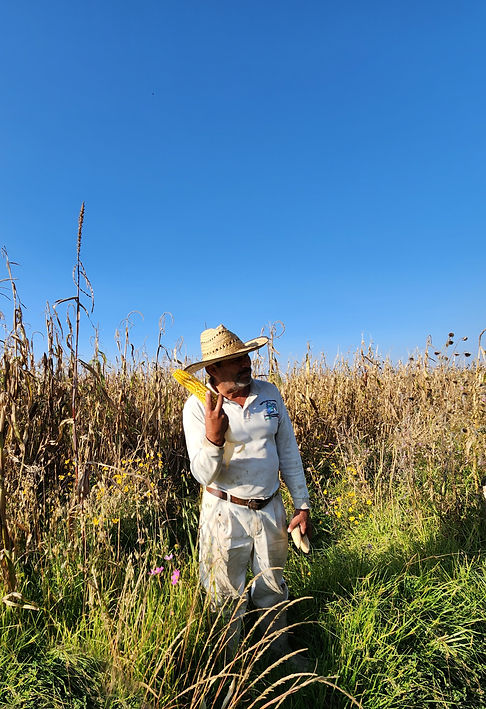
Full Story
Corn is one of the oldest known food grains and to this day continues to be an important key to food, so much so that Mexican gastronomy was recognized by UNESCO as intangible heritage of humanity, and this is due to its richness. and biodiversity, in which corn stands out as the main ingredient.
Traditionally, corn has been grown from generation to generation through the “milpa system”, which is characterized by being an ancestral ecosystem of polycultures free of herbicides and other toxic substances that have benefited human health and have been the basis of food sovereignty of farmers. For this reason, we have been recognized worldwide for preserving, conserving and protecting these native seeds.
Mexico was named the center of origin and domestication of corn, since the oldest vestiges (until now) of corn seeds were found in the center of the country and most likely the greatest diversity of this grain is concentrated here because, of course, Of the 64 RACES of corn that exist, 59 are still planted in Mexico today.
Diversity
In the State of Mexico, corn is one of the main crops and the entity has a great diversity of native varieties. Among these materials, at least 18 of the 64 races of native corn documented in Mexico are reported.
The north of the State is better known as the Corn Valley because on the surface of several municipalities 85% of native corn is produced and protected with its original races: chalqueño, conico, palomero (reventador) and cacahuacintle.
On the other hand, there are corns of different grain colors that are known as pigmented corns, which, unlike white grains, contain chemical compounds called “anthocyanins” and these substances are what give them colorful and striking colors. In addition, they contain properties nutraceuticals and antioxidants.


Evolution
Corn as we know it now is the product of domestication carried out by farmers thousands of years ago through selection processes and other ancestral practices. However, today there are hybrid or improved corn seeds that were generated through of field practices to increase corn yields (production) and supply the industry's demand.
Without improved corn being enough, countries with high consumer demands supported by transnational companies created technology to manipulate and modify the genome of seeds through genetic engineering and as a result created transgenic corn (also known as genetically modified organisms) with in order to induce resistance to pests, diseases and herbicides highly toxic to the plant (such as glyphosate), among others.
However, over the years it has been scientifically proven that hybrid corn does not retain the nutritional properties of native Mexican corn, much less transgenic corn. On the contrary, the application of glyphosate and its residues in the soil and in the grain generates different types of cancer in humans, so it should not be considered food for humans and is only used for animal consumption. In Mexico, the planting of transgenic corn is currently prohibited.

Yaj Nal
The story of Yaj Nal begins by participating in the planting of native corn, this activity has a special meaning since it represents the identity and culture of our communities that for years have preserved the knowledge of many generations of farmers, at the same time, This crop has become the heritage of every peasant family.
With the aim of not losing all that knowledge, smells, colors, flavors, textures and varieties, at Yaj Nal we are dedicated to producing, preserving, transforming and marketing this native crop and its derivatives through agroecological practices that generate sustainability in the process. productive and we turn them into products that are not only pleasant to the palate, but also convey the entire history behind them.
We are located in the northern region of the State of Mexico, which includes the municipalities or cities of Atlacomulco, Jocotitlán, Acambay, Ixtlahuaca, San Felipe del Progreso and Jiquipilco, among others. In this region, the sister cultures Otomí and Mazahua stand out, who are characterized by currently conserving many of their practices, customs and traditions in the corn production process, in addition, they represent the majority of the total production of this grain in the region. North Region.